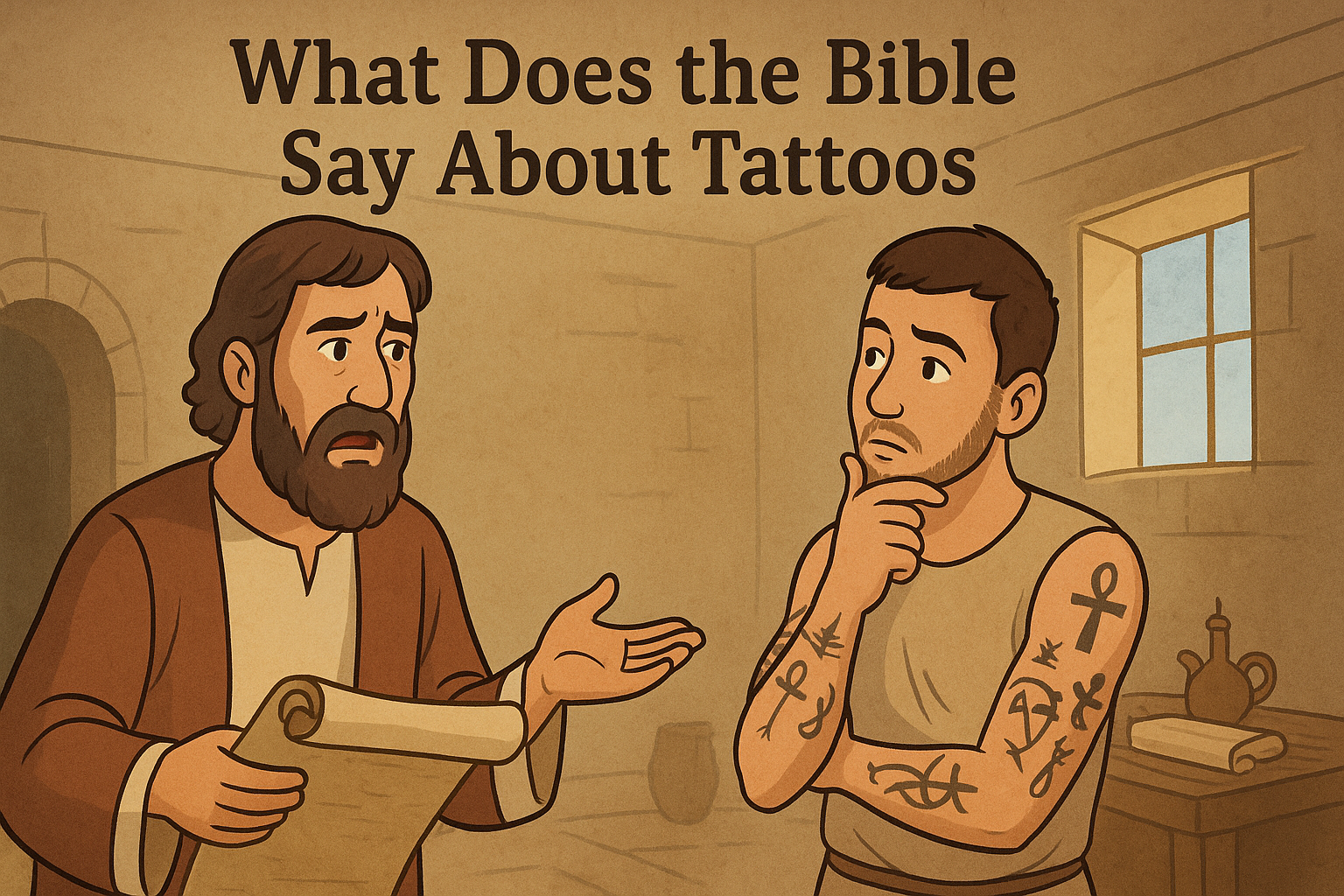
The Bible provides few direct references to body markings. One verse in the Old Testament states, “Do not cut your body for the dead or put marks on you” (Leviticus 19:28, New Living Translation). This command has given rise to a range of interpretations among believers throughout the centuries.
Although the scripture offers a clear prohibition in that particular passage, understanding the command in its original context and applying it to our modern society presents challenges. This article explains exactly what the Bible says about tattoos, examines its ancient background, reviews differing viewpoints within the Christian community, and suggests how one may reflect on this issue today.
Understanding the Old Testament Command
The verse found in Leviticus is the main biblical text that guides discussions about body markings. In its original setting, the instruction came as part of a code of laws given to the nation of Israel. The command forbade the making of marks on the body in a time when such actions were associated with pagan rituals and mourning practices for the dead. In the New Living Translation, it clearly states not to cut the body or mark it. The prohibition was meant to help the Jews remain set apart from the practices of surrounding nations. It is important, however, to note that the command was given in a specific cultural and religious setting, a context that differs significantly from today’s society.
Cultural and religious practices of worship and ritual sacrifice were common forms of expressing loyalty to pagan gods in the ancient world. Many non Israelite groups would adopt body modifications as part of their religious or tribal expressions. The command in Leviticus appears in a broader set of law instructions that aimed to build a distinct identity for the people of Israel. Although modern tattooing does not always share those same religious foundations and is more often a personal and artistic expression, many still question the appropriateness of tattoos in view of this scripture.
Interpreting the Leviticus Text in Contemporary Times
Scholars and theologians have debated how to interpret the injunction concerning marks. Some believers consider the command in Leviticus to be specific for its time only and do not hold that it applies in the same way today. These interpreters see the prohibition as part of the ceremonial laws from the Old Testament that were fulfilled in Christ. They argue that the laws concerning diet, ceremonial washings, and even body markings have a particular purpose in ancient Israelite society but do not carry the same weight for Christians who follow the New Testament teachings.
Other Christians view the prohibition more strictly. They believe that even though the law was given in an ancient context, the commands serve as a moral guide for how believers should treat their bodies. In this view, the body is sacred and a temple of the Holy Spirit, and any permanent marking might be seen as disrespectful or as altering God’s creation. For these Christians the decision to have a tattoo may require careful prayerful reflection and consideration of one’s motives.
Different Views in Christian Tradition
Within the Christian community, opinions on tattoos vary. Some churches and denominations warn their members against acquiring tattoos of any kind. They emphasize the biblical call to holiness and the importance of maintaining a body that reflects God’s purity. They often cite the verses from Leviticus and stress that the command was not just about following ritual norms but about exhibiting respect for the body that God has given as a gift.
On the other hand, many Christians see tattoos as a form of self-expression that comes with no inherent spiritual risk if done properly. They highlight the fact that the New Testament does not offer explicit instructions regarding tattoos. Instead, passages that speak of the body as a temple serve to encourage responsible treatment of oneself rather than to issue an absolute ban on body markings. In this interpretation, the choice to have a tattoo is an individual matter. Individuals should consider their personal motives and the potential impact on loved ones.
Examining the Role of Context and Cultural Background
The original command in Leviticus is closely tied to cultural practices of ancient Israel. In that era, making marks on the body could signal an affiliation with pagan worship. By contrast, in modern society tattoos often serve as a means to display personal identity, commemorate important life events, or simply appreciate art. Recognizing the vast differences in social and cultural settings helps shed light on why many Christians today approach the topic with an open mind.
Many scholars remind us that the Bible uses different language for laws that pertain to ceremonial practices and those that address personal behavior. For instance, the law against eating certain foods was designed for a specific purpose in ancient Israel and does not apply to modern believers. Similarly, what was once a visible marker of idolatry may now just be an aesthetic choice. A careful study of scripture indicates that a careful reading of the text requires understanding the intent behind the law. Some believers conclude that tattoos, when free of pagan symbols or negative connotations, do not contradict the spirit of what is meant to honor God with our bodies.
Insights from the New Testament
While the Old Testament command draws attention to tattoos, the New Testament provides a broader understanding of a believer’s relationship with their physical body. The Bible teaches that the body is a temple of the Holy Spirit and that our physical self must be treated with respect. However, there are no specific New Testament texts that forbid tattoos or body markings. Instead, the New Testament emphasizes matters of the heart and personal transformation through a relationship with Christ.
This emphasis creates space for differing views. Believers who hold that tattoos are inappropriate may focus on the importance of not conforming to patterns that may suggest a lack of reverence for the body, while those who see tattoos as acceptable point out that the focus of the modern Christian life is internal rather than external. For example, the apostle Paul in his letters reminds believers that no external decoration matters but only the transformation of the mind and spirit. This idea encourages Christians to examine whether bodily modifications are made with the proper understanding of God’s love and forgiveness.
Considering Symbolism and Meaning Behind Tattoos
Another key aspect of the discussion around tattoos is the meaning behind specific symbols and designs. When examining what the Bible says about tattoos, it is equally important to ask whether the symbols carry a message that is consistent with one’s faith. For some, a tattoo of a cross or a Bible verse may serve as a reminder of their commitment to following Christ and provide encouragement during difficult times. These believers argue that the art becomes a personal testimony of faith.
On the contrary, tattoos that contain symbols with a negative or pagan background might be perceived as conflicting with Christian values. In this situation, the guidance from scripture calls for discernment, praying for wisdom to understand what best honors God with one’s body and mind. Ultimately, much like many other subjects of moral decision making, decisions about tattoo designs should be made with prayer, counsel from trusted spiritual guides, and self reflection.
A Closer Look at the Body as a Sacred Gift
The idea that the body is a sacred gift is found throughout the Bible. Many Christians believe that the body deserves special care because it represents God’s creative work and is the home for the Holy Spirit. This notion invites a careful handling of how we modify our bodies. Some argue that any permanent change, such as a tattoo, might be seen as an act that does not fully honor the pristine condition in which God created the body.
In contrast, other believers understand the mandate for living a life that pleases God to include much personal expression. They assert that when tattoos are chosen thoughtfully and free of any satanic or idolatrous meaning, they become a way to celebrate God’s creativity as well as human artistry. The conversation then shifts from viewing tattoos as inherently sinful to assessing motives behind the act. Both sides share the idea that our actions should focus on love, care, and respect for the gift of healing that is our body.
Practical Steps for Christians Wrestling with the Question
If you are a believer questioning whether to get a tattoo, the first step is to examine your motives. Are you considering a tattoo as a mark of rebellion, or as a testimony of faith? Take time to pray and study the scriptures carefully. Many who consult resources such as Genuine Bible Truth find that a thoughtful understanding of biblical texts can shed new light on difficult subjects.
Next, engage in conversation with mature members of your church community. Different churches hold varying views when it comes to tattoos. Some are strict while others are more lenient. In your local gatherings or Bible study group, you can find insight by discussing what the Bible teaches about caring for the body and honoring God with daily choices. Sometimes the counsel of respected church leaders provides a fresh perspective that aligns with your personal understanding of scripture.
Finally, whether you decide to get a tattoo or not, allow your choice to lead you to deeper reflection on how you live out your faith. After all the scriptures have shown that genuineness in spirit and a heart seeking after God are the most important aspects of a believer’s life. It is not so much the physical mark that matters but the meaning behind it as part of your journey with God.
Reconciling the Biblical Text with Today’s Culture
Modern society embraces many forms of art and self expression that would be foreign to people in biblical times. Tattoos today often represent cultural art or serve as a personal symbol of important life events. When asking what the Bible says about tattoos, one must recall that the ancient command in Leviticus was addressing practices prevalent among surrounding cultures at that time. It specifically cautioned against behaviors that would make people look like others who participated in idolatrous activities.
In our discussion on tattoos, it is essential to connect with the broader message of Scripture. What matters most is the condition of our heart and the sincerity of our worship. For some believers, a tattoo is simply another way to carry a reminder of a cherished scripture passage or to serve as an outward expression of an inner commitment to living a life of faith. When tattoos are free of any associations with pagan practices or negative symbolism, many conclude that they do not directly contradict the intention of biblical commands.
One must also consider that the Bible never provides a comprehensive list of how to handle every modern technology or trend. Instead, the scriptures give us guiding principles that help evaluate each decision. If a tattoo encourages you to remember a favorite Bible verse, a cherished biblical event, or even a personal story of transformation, then it may serve as a symbol of the living word in your heart. In these cases, other believers frequently point to the overall message of new life and transformation found in the New Testament as a framework for evaluating body modification.
The Way Forward for Believers and Seekers
Every conviction carries with it the need for personal reflection and communal conversation. As you evaluate whether a tattoo fits your personal faith journey, it is important to honor both scripture and the guidance of your faith community. Many who study biblical texts suggest that the matter should be approached with care and respect for both historical context and modern realities.
Believers are encouraged to ask: Does this tattoo enhance my testimony in a positive way? Is it a symbol of joy and gratitude or might it create unnecessary division within my community? Answers to these questions are often found through prayer and discussion with trusted mentors. When facing controversial issues such as tattoos, many Christians refer to the story of how early followers of Christ navigated cultural differences while remaining true to the teachings of the gospel. By studying biblical examples and seeking counsel, one finds that decisions about body markings become part of a broader path geared toward living authentically for God.
A related discussion can also be seen in texts addressing other challenging topics such as what does the Bible say about homosexuality. Although the subjects differ, both issues call for careful examination of scripture and sensitivity to cultural differences in meaning. The same careful process of study is necessary for applying scripture faithfully in contemporary life.
Embracing the Heart of the Message
Scripture consistently teaches that the most significant aspect of our faith is the transformation of the heart. The external differences, including physical marks, matter far less than the inner alignment with God’s will. The Bible calls on each believer to allow the Holy Spirit to guide personal choices so that every step reflects a desire to worship God sincerely. When that is the case, whether a person has a tattoo or not becomes secondary to the genuine commitment shown in thoughts and actions.
In your own examination of what does the Bible say about tattoos, consider that both views strive to honor God with the body. One view upholds the Old Testament command as a continuing call to distinctiveness and holiness. The other sees the renewal offered by Christ as lifting cultural restrictions that no longer fit in a vastly different social reality. Both perspectives emphasize a sincere desire to serve God well. By taking time to read the scriptures, to pray, and to discuss, you can arrive at a decision that aligns with your deep convictions.
The invitation is clear: let your choices be governed by love, reverence, and the honest pursuit of truth in light of God’s eternal word. Whether you decide that tattoos enhance your testimony or you choose to refrain from them, ensure that your decision reflects the integrity of your heart and the respect you hold for your body as a sacred gift.
A Thoughtful Reflection on Body Markings
Ultimately, the biblical approach to tattoos rests not on a simple yes or no answer but on the recognition that scripture speaks both to cultural practices and to lasting principles of honoring God. The one explicit command found in the Bible reminds us to avoid practices once associated with pagan rituals. Yet as believers, we also know that transformation in Christ centers on an inner renewal that transcends outward appearance.
If you seek further insight into how biblical texts guide personal decisions, you might explore resources on similar topics provided by communities such as this discussion on morality or reflect on the meaning of ancient terminology found in articles discussing words like selah in scripture. Both examples encourage a deeper reading of the biblical narrative and promote a thoughtful approach to modern dilemmas.
The dialogue about tattoos continues to evolve in modern churches and among believers. What is clear from a careful reading of the Bible is that scriptural guidance calls on us to evaluate any decision with both historical insight and heartfelt renewal. As you move forward on your path, may you find wisdom that supports your personal responsibility in caring for the body and spirit that God has so graciously given.