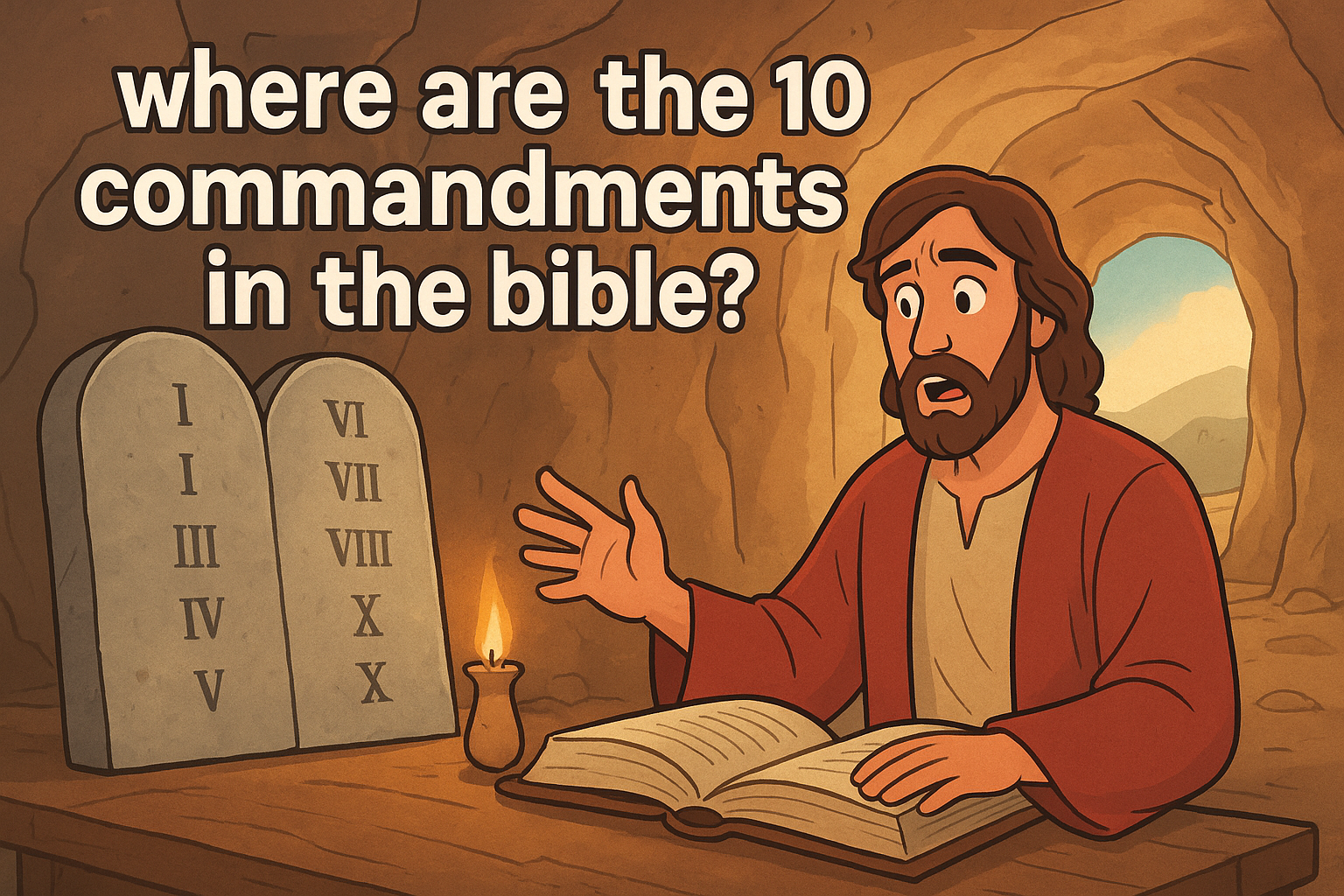
The question of where to find the 10 commandments in the Bible is answered by pointing directly to the Old Testament. The commandments are given in the book of Exodus chapter 20 and they are repeated with some variations in the book of Deuteronomy chapter 5. These biblical accounts record how God revealed His moral law to Moses when he was on Mount Sinai.
The Biblical Account of the 10 Commandments
The Bible clearly states that the 10 commandments were given to Moses during a divine encounter on Mount Sinai. In Exodus chapter 20, the narrative explains that God spoke to the people and stated these specific rules. The account emphasizes that the commandments came directly from God. Later, Moses repeats these same laws to the Israelites in Deuteronomy chapter 5 when they are preparing to enter the promised land. This repetition reinforces the enduring importance of the moral code and serves as a reminder to the people of the covenant they have with God.
The Context Behind the Commandments
The biblical narrative describes a period when the people of Israel were newly freed from Egyptian bondage. In the wilderness, they needed a clear guide to build a community based on divine principles. The 10 commandments provided ethical and spiritual instructions that defined the relationship between God and His people and outlined ethical obligations toward one another. The passage in Exodus reveals that the commandments cover not only religious devotion but also interpersonal relationships. This dual aspect has captured the attention of theologians and biblical scholars for centuries.
The Structure of the Divine Law
The commandments are organized in a way that first addresses the relationship between humans and God. They call for the worship of God only and prohibit the use of idols or other forms of worship that do not honor the one true God. The remainder of the commandments deals with interactions among people. This structure establishes a foundation for understanding the separation of duties in religious and secular life. Many believers study these chapters not only for religious reasons but also to gain insight into the ethical foundations of a society governed by divine principles.
Historical Importance of the Commandments
The account found in Exodus and Deuteronomy has greatly influenced not just religious thought, but also legal systems and ethical standards in many parts of the world. The commandments have served as a moral benchmark for communities and societies. Their influence extends beyond the boundaries of any one religious tradition. Many legal systems have derived principles that mirror the commandments, such as honoring a higher law and valuing human dignity. This widespread influence makes them a significant landmark in world history.
Interpretation and Tradition Through the Ages
Throughout history, the 10 commandments have been the subject of many commentaries by biblical scholars, theologians, and leaders from various religious traditions. Different groups have had distinct interpretations of some of the commandments. For instance, while many groups maintain that the commandments are a complete moral law, others see them as part of a larger set of Old Testament laws that include ceremonial and judicial regulations. Despite these debates, the fundamental truth that the commandments represent God’s moral instruction remains a central belief for most believers.
Religious traditions have also placed these commandments at the heart of worship. They appear on church doors and are presented in various forms as part of the teaching of faith. Understanding these scriptures in context is crucial. Many Christians find it helpful to consult modern Bible study resources to grasp the layered meanings behind these ancient texts. For example, exploring the narrative of the Israelites in the wilderness can provide insight into the challenges and hopes that accompanied the giving of the commandments.
Differences in Biblical Translations and Their Impact
There can be slight differences in wording among the various Bible translations. Some editions of the Bible use language that may seem old-fashioned, while others render the text in language that is accessible to modern readers. For our discussion, we refer primarily to the New Living Translation when quoting Scripture. This translation is known for its clarity and ease of understanding, which allows modern readers to grasp the core messages without struggling with archaic language.
It is helpful to note that while the wording might vary, the message remains the same. Scholars emphasize that the moral principles communicated through these commandments are consistent across translations. For those interested in learning more about reading and studying the Bible, resources such as guides on where to start reading the Bible can provide additional insights.
Insights from Exodus Chapter 20
Exodus chapter 20 is perhaps the best-known section that details the 10 commandments. The chapter is structured as a direct address from God to the people. The passage makes it clear that the commandments represent a covenant between God and His people. Each commandment is presented as a direct order from God and serves as a concise summary of the expectations He has for those who follow Him.
While the text itself is brief, its impact is vast. Many Christian sermons and Bible studies spend significant time analyzing each commandment and exploring its applications in everyday life. The simplicity of the commandments combined with their profound implications makes them a central focus of ethical teaching.
The Reminder in Deuteronomy Chapter 5
Deuteronomy chapter 5 revisits the commandments as Moses prepares the next generation of Israelites for life in the promised land. In this book, the commandments are repeated with explanations that relate to the people’s experiences in the wilderness. The repetition serves not only as a reminder but also as a confirmation of the lasting covenant between God and Israel.
This chapter adds a historical and emotional depth to the commandments. It reminds the people of past experiences and the great help that God provided during challenging times. In this way, the narrative reinforces the idea that the commandments are not merely rules to be followed, but they are integral to the identity and life of the community of believers.
Modern Application and Relevance
The 10 commandments remain relevant in modern discourse. They continue to shape moral perspectives and influence ethical decisions. Many see these commandments as a bridge between ancient wisdom and contemporary values. They are used as a starting point in ethical discussions in many community and religious settings.
Modern Christians often read the commandments as guidelines for personal behavior and community interaction. Scholars point out that these commandments encapsulate principles that promote justice, respect, and integrity in society. They are a reminder that the moral law is not confined to the past but lives on in every generation that seeks to honor God and one another.
This enduring relevance of the commandments has led to diverse studies that connect biblical teachings to modern legal and social thought. Whether one is a devout believer or a student of history, the commandments serve as an engaging topic for those interested in understanding the evolution of law and ethics.
Challenges in Interpreting Ancient Texts
While the location of the 10 commandments in the Bible is clear, interpreting these cases can reveal complexities. Ancient texts often use language that carries multiple layers of meaning. For example, the exact nature of what it means to keep the commandments may differ based on cultural and historical contexts. Scholars must consider the historical background, the intended audience, and the broader context of the passages.
This interpretative challenge is one reason that various religious groups might emphasize different aspects of the commandments. Some take a strictly literal approach, while others apply interpretative methods that see the commandments as part of a larger ethical framework. This diversity of interpretation means that discussions and debates continue, enriching our understanding of these ancient yet enduring principles.
The Role of the Commandments in Religious Life
In addition to their historical role, the commanding words have a central place in the lives of many believers. Churches and religious education classes often highlight the significance of keeping the commandments as a sign of loyalty to God and as an expression of love for others. They serve as a reference point in religious instruction and as a common ground for diverse faith communities.
The principles expressed in the commandments have found a home in many personal and community practices. For instance, worship services sometimes include a recitation of the commandments as part of the liturgy. This practice serves as a moment of reflection, a call to action, and a reminder of the moral responsibilities that come with being part of a covenant community.
Faithful commitment to these moral laws is seen by many as a way to cultivate respect, honor, and peace among people in their everyday interactions. The commandments are not merely viewed as ancient edicts; they are living words that inform a person’s path toward spiritual maturity and ethical living.
Learning More About the Bible and Its Teachings
For those interested in exploring more deeply the foundations of biblical law, the Bible itself is rich in content that offers historical background and theological insights. Reading the Bible and studying its passages can bring clarity to the context and the significance of the commandments. Beginners may find it useful to know where to start reading the Bible and progress from there. Resources such as guides on Bible study can help illuminate the deeper meanings behind the text.
The journey through the Bible reveals that the 10 commandments are just one part of a larger narrative that speaks of a relationship between God and humanity. Understanding the broader biblical story can provide a fuller perspective on why these laws were given and how they continue to influence believers today. For further exploration of foundational biblical topics, readers may want to visit a site that offers genuine biblical insights by reading more articles related to Bible study.
Reflection on the Universal Appeal of the Commandments
One of the most significant aspects of the commandments is their universal appeal. The clear instructions about respecting and worshiping God, as well as treating others with fairness and compassion, resonate with many people across different cultures and periods. Although the commandments were originally given in a very specific historical context, their principles extend far beyond their original setting.
Many modern discussions about ethics and morality refer back to these commandments as a shared set of values. Whether it is in educational settings or in conversations about good governance and human rights, the 10 commandments are recognized as a standard of integrity and justice. This broad acceptance demonstrates that the core ideas they embody transcend time and remain pertinent to everyday life.
The influence of these biblical laws can be seen in how communities organize themselves and how individuals work toward achieving a society based on respect and mutual care. Their continuing relevance is a testament to the wisdom of the original text and the enduring nature of its moral guidance.
Scholarly Perspectives on the Commandments
Throughout the centuries, biblical scholars have offered various interpretations of the commandments. Many emphasize that the commandments are more than ancient legal precepts. They are a summary of a profound relationship between Creator and creation and present a moral framework that has influenced countless legal systems. Some scholars argue that the commandments are the root of many modern moral standards while others note that they operate in tandem with other biblical teachings.
These scholarly discussions often involve examining the languages and cultural contexts of the day. For example, understanding the original Hebrew terms used in Exodus and Deuteronomy can provide modern readers with deeper insights into the intended meanings. Research from ancient texts tells us that these commandments were meant to serve as a foundation for living a righteous life. Whether one is examining them from a strictly theological standpoint or as part of the broader history of moral philosophy, the significance of the commandments has been apparent for thousands of years.
In classrooms and seminaries, debates continue about the full implications of the commandments. These discussions help maintain an active interest in the text and encourage readers to approach the Bible with both reverence and curiosity. For anyone who wishes to learn more about the influence of biblical texts on modern society, studying the commandments offers a useful starting point.
Practical Advice for Those Seeking to Study the Commandments
If you wish to better understand where the 10 commandments are in the Bible, start by reading Exodus chapter 20 and Deuteronomy chapter 5. Take time to consider the narrative context in which they were given and reflect on their repeated use as a moral compass for the community. Bible study groups and online resources can offer additional insights and help you explore various interpretations of these passages.
For newcomers to the Bible, it may be helpful to consult trusted study guides and commentaries that explain the cultural and historical background of these texts. This can help clarify some of the more complex language and symbols used in the Bible. Many educational websites and articles on Bible study provide a clear overview of how the 10 commandments fit into the overall narrative. For example, you may find useful information on where to start reading the Bible and how these teachings relate to the rest of Scripture.
As you read, remind yourself that the commandments are part of a continuing discussion about how humans should live in relationship with one another and with God. Approach the texts with an open mind and consider the long history of interpretation that has contributed to our understanding of these ancient laws.
Bringing It All Together
The location of the 10 commandments in the Bible is definitive. You will find them recorded in Exodus chapter 20 and Deuteronomy chapter 5, where they are part of the broader revelation of God’s law to His people. Over centuries, these commandments have not only defined a covenant between God and Israel but have also guided ethical discussions in numerous cultures and societies.
The story of the commandments touches on historical events, a deep religious commitment, and a rich tradition of teaching and debate. The narrative of Moses receiving divine instruction from God on Mount Sinai is a turning point in the Bible and continues to symbolize the hope for a life that honors moral truth and respects human dignity.
Individuals seeking to explore the Bible will find that studying these passages opens a window into the life of ancient Israel as well as into the principles that guide ethical behavior today. Whether you come to the text as a believer, a student of history, or someone interested in moral philosophy, the 10 commandments offer a clear and lasting message about the kind of relationship that is expected between God and human beings and among human beings themselves.
A Living Tradition and the Lasting Witness of the Commandments
The 10 commandments have stood the test of time because they speak to fundamental aspects of human life. They remind us to honor God and to treat each person with respect and care. In every generation, these divine instructions call people to evaluate their lives, their actions, and their responsibilities toward others. The biblical accounts in Exodus and Deuteronomy continue to be relevant not simply as ancient law but as a guide to living in a community that values honesty, integrity, and compassion.
Today, when you ask where are the 10 commandments in the Bible, you are pointing to a living tradition. The texts in Exodus chapter 20 and Deuteronomy chapter 5 have been cherished and passed down with care. They offer a foundation of values that shapes religious thought and ethical conduct across the world.
This rich narrative encourages every reader to explore the Bible in its entirety. In doing so, you may discover further insights about the divine relationship and the many ways in which ancient wisdom continues to guide lives today.