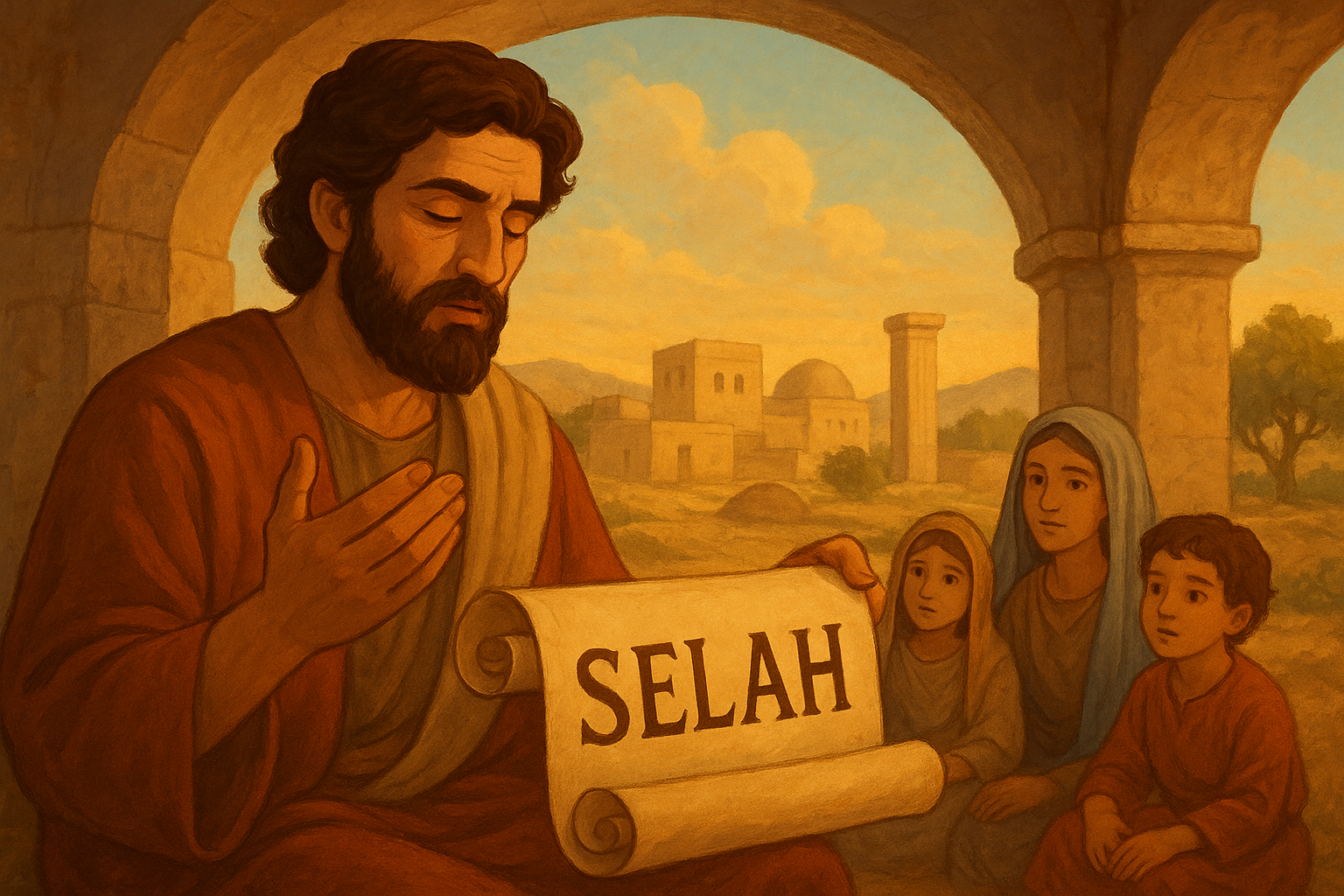
In the Bible the term “selah” appears in many verses and is traditionally understood as a word that instructs the reader or listener to pause and reflect.
Scholars and church traditions have offered several theories on its meaning. Some believe it is a musical notation directing a pause in the singing of a psalm while others see it as an invitation to meditate on the words that have been spoken. At its simplest, selah means to stop and reflect upon what has been read or sung.
Origins and Appearances of Selah in Scripture
The word appears primarily in the poetic portions of the Bible. Most instances of selah are found in the book of Psalms, which presents many poetic songs and prayers, and a few appear in the book of Habakkuk. Because the exact origins of the word are not clearly defined, biblical scholars have studied its context to better understand its purpose. The term refers to moments when the reader is meant to pause and consider the significance of the words that have just been presented.
In the Psalms the insertion of selah often comes at the end of a particular thought or section. Many familiar translations render it as a musical direction. The idea behind the term is that reflection is an integral part of worship and meditation. Such reflective pauses help the reader or singer to become more attuned to the spiritual truths contained in Scripture.
Musical and Liturgical Interpretations
One proposal from biblical scholars is that selah may have originally been a musical or liturgical signal. It might have instructed the musicians or choir to hold a long note or to pause briefly in playing, thereby underlining the importance of the previous lines. The musical interpretation gives a vivid picture of the psalmist using melody to lead the congregation into a deeper meditation on the words.
This understanding complements the view that selah serves as a call to stop and reflect. Instead of hurrying through Scripture, the inclusion of this mark is a reminder of the value in pausing to listen to God. It encourages the listener to consider the meaning carefully and to allow the words to settle in the heart over time.
Theological Reflections on the Purpose of Selah
Beyond its possible musical role, selah holds theological significance. The command to pause aligns with biblical themes of silence and contemplation in the presence of God. Scriptures often encourage believers to let go of the haste of everyday life and instead focus on the spiritual lessons and promises found in the Bible.
In this way, selah becomes more than a mere notational symbol. It is a gentle command to be intentional in worship and prayer. The word reminds readers that God invites us to slow down and reflect on His word rather than pass quickly over it. Such reflection helps believers internalize God s truths and allows them to see the broader picture of his redemptive work.
Many commentators argue that this reflective pause is essential for an effective response to Scripture. In moments of silence, the mind and heart open, enabling a deeper experience of prayer and worship. This call to contemplation has resonated with many Christians through history and continues to influence modern worship practices.
Insights from Biblical Scholars and Traditions
Biblical scholars and theologians have proposed various positions regarding the meaning of selah. Some view the word as nothing more than a pause indicator, much like a period at the end of a sentence; others see deeper layers in its usage. These interpretations sometimes vary among different denominations and traditions.
One position suggests that selah serves as a gateway to deeper understanding. When a psalmist inserts a selah, it is as if they are inviting the reader to contemplate the nature of God s promises and the reality of his kingdom. This invitation to reflect offers an opportunity to examine and respond to the message of hope, forgiveness, and transformation found throughout Scripture.
Scholars also propose that selah could serve a double function. Not only does it signal a pause in musical performance, but it encourages a pause in thought. In this dual capacity the term reinforces the idea that both sound and silence have a sacred place in the act of worship. Readers may turn to resources such as biblical insights to study further how different traditions have understood selah over the centuries.
Even when the exact translation remains uncertain, the general consensus among Christians is that the word calls for a reflective pause. This pause is especially useful during times of inspirational reading. By taking the moment to reflect, a person can receive the spiritual nourishment intended by the passage.
The Value of Reflection in the Reading of Scripture
Selah serves as a reminder of the importance of reflection. The Bible contains many instructions urging believers to consider what has been accomplished by God. These pausing moments invite readers to ponder questions like: What is the deeper meaning of this passage? How does it speak to my current situation? What does it reveal about the character of God?
When one pauses at selah moments, the focus shifts away from a hurried reading towards a contemplative encounter with the text. The pause gives the reader a sense of Sabbath in the midst of the psalm. It reminds us that worship is not merely a routine but an opportunity to engage our hearts and minds intentionally. The reflective moment has practical implications in the daily life of a believer; it is an invitation to meditate on God s words and to gain fresh perspective.
As modern Christians study the Bible they come across this ancient marker and may wonder about its practical application in everyday reading. Taking a brief pause at a selah moment can create space for prayer, meditative silence, or further discussion in a small group setting. Rather than glossing over these markers, many have found them to be opportunities for renewal and focused worship.
Historical and Cultural Contexts of Selah
Understanding selah requires us to consider the ancient world in which it was written. The term was likely part of the oral traditions that preceded the written text. The ancient Israelites were gifted with both musical and poetic expressions. Their use of selah is rooted in a rich cultural heritage in which music played a central role in worship.
Historical research indicates that selah might have been used as both a performance instruction and a literary device. The cultural context of ancient worship suggests that pausing to reflect was considered necessary for proper contemplation and response to God s revelations. Whether used to adjust the tempo of a song or to mark the end of a thought, selah integrates rhythm and meaning in the reading of sacred texts.
The ancient readers took these cues seriously. In their context moments of pause were times to let the truth of God s word resonate in their hearts. Such moments are echoed in the disciplines of quiet prayer and meditation practiced by believers today.
Practical Reflections Arising From Selah
Selah encourages us to be intentional in our approach to Scripture. Its simplest instruction is to pause and consider carefully what has already been presented. When we adopt this practice of silent reflection it can have a refreshing impact on our spiritual walk. Reflection leads to understanding and understanding is essential for faith building.
If you begin your personal Bible reading with the idea of pausing at selah moments you may find that your insights deepen over time. This pause does not need to be long; even a few thoughtful moments can provide mental space to appreciate the significance of the message. In the hectic routines of daily life finding time to reflect may seem challenging but incorporating moments of silence in reading can renew and reenergize you. Likewise, in a group setting these reflective moments can pave the way for meaningful discussions.
The real benefit of selah is found in the practice of mindfulness that it fosters. Instead of simply consuming text rapidly the reader is called to absorb and meditate on the truth of each passage. This mode of reading not only enhances the spiritual experience but also creates an environment in which God s presence is deeply felt.
Comparing Selah to Other Biblical Practices
Throughout Scripture we see other examples of practices that encourage a shift in our usual patterns of thought. For example, in moments of prayer or inward examination biblical figures frequently take time off from their routines to listen for God s guidance. Selah fits into this broader pattern of intentional stopping and listening. It is not unlike the quiet moments that many people set aside for meditation or prayer in their daily lives.
When we compare selah to these other sacred practices we see that the Bible consistently upholds the need for pause and introspection. Such moments create a rhythm in the believer s life where periods of activity are balanced with times of contemplative silence. This balance is crucial for making decisions that rest upon spiritual insight as well as for living a life that is in tune with divine purpose.
In everyday reading the adoption of this reflective approach can lead to a transformation in how Scripture is experienced. Instead of a rushed recital of words the reader enters into a conversation with God. This dialogue between the heart and the words of Scripture is a cornerstone of spiritual growth.
Modern Applications and Reflections on Selah
For many people who study the Bible today the insertion of selah serves as a tangible reminder to slow down and meditate. While different translations handle the term in varied ways some choose to leave it as is while others provide a translation such as “pause.” Regardless of the presentation the underlying message remains the same: take time to reflect on the significance of what has been read.
This principle of pausing holds valuable lessons for modern life in which speed and productivity often take center stage. Incorporating moments that invite reflection can lead to more thoughtful decision making and a deeper grasp of life s broader meaning. Christians who integrate this practice may find that it grants them greater clarity in their relationship with God and in their personal growth.
Many who have adopted a practice of quiet reflection during their study of the Psalms report that it enhances their worship and prayer experience. Instead of feeling rushed in responsive prayer the pause invites a quieter atmosphere in which inner thoughts can emerge. Such deliberate pauses can transform routine Bible reading into times of heartfelt encounter and transformation.
Diverse Scholarly Views and Interpretations
It is important to recognize that while the consensus leans toward reflection as the purpose behind selah there exist several scholarly views that suggest alternative functions of the term. Some critics argue that selah might have also signified a change in tone or a call for a musical transition. Others note that similarities can be drawn to practices in other ancient Near Eastern cultures where such words indicated a theatrical pause in recitation or performance.
These diverse views enrich the discussion of selah rather than detract from its primary function as a reflective pause. The various interpretations remind readers that the Bible is a living text. It invites continual examination and dialogue, both among scholars and among believers. While the precise definition may remain elusive for some there is broad agreement that selah encourages deliberate thought and focus.
For those interested in exploring additional biblical topics and interpretations consult discussions on reliable resources such as the site dedicated to biblical truth for further insights. Engaging with different scholarly perspectives can contribute to a more rounded understanding of how ancient practices influence modern theologies.
Reflective Practices Inspired by Selah
Using selah as a model for reflection can have a meaningful impact on one s spiritual discipline. Instead of reading quickly through text many individuals now incorporate planned pauses to let the message sink in. This practice involves setting aside a specific moment to stop, close the eyes, and allow the passage to resonate deeply.
For example a person might decide to read a single psalm in a quiet spot and then simply sit for a few moments reflecting on the truths in the psalm. During this pause one can consider the language of the text, the historical context, and how the words apply to current situations. This reflective technique is helpful for personal growth and can be shared with community groups during collective Bible studies.
The act of pausing also brings a sense of calm and reassurance. When one stops to contemplate the depth of scripture there is often a realization that life s challenges are met with divine presence and guidance. This insight offers a counterbalance to the rush of everyday demands and invites a return to spiritual grounding.
Ancient Practice and Contemporary Worship
Ancient worship practices that included selah have a legacy that continues to shape modern expressions of faith. Many traditional church services incorporate periods of silence and musical interludes that echo the reflective pauses of ancient psalms. Such moments are treasured not only as historical artifacts but as enduring methods to experience the divine.
In contemporary worship the timeless command to pause translates into brief moments of silence during sermons or community prayers. Whether observed individually or collectively, these periods may foster a better connection with God and deepen the communal faith experience. Simply pausing to absorb a realization or feel gratitude keeps the spirit of selah alive in every generation.
This idea has also been embraced by Christian leaders who stress the need for quiet time in spiritual formation. Recognizing the beauty of silence and contemplation in Scripture can reinvigorate personal devotion and community worship. By embracing the guidelines laid out by selah, modern believers are reminded to create space amid their busy routines for intentional communication with God.
Integrating Reflection into Everyday Life
The call of selah extends beyond the pages of ancient texts. It invites modern readers to challenge themselves to slow down and find moments of calm in the midst of a busy life. One practical method is to identify specific sections of a Bible reading to pause and meditate upon. These pauses can be integrated into personal devotional times or interwoven with group discussions in church or study groups.
Choosing a comfortable area free from interruptions can be one way to implement this practice. During the pause one might focus on asking reflective questions about the text such as what lessons does it hold for me today or how might its message alter my approach to life s challenges. This methodology leads to an introspective approach that enriches not only Bible study but other aspects of daily living.
Another technique is to read aloud and allow the rhythm of the words to guide the pause. This auditory element can transform a reading session into an engaging encounter. The natural rhythm of language gives inherent cues for reflection even without the printed word selah. Over time such habits may cultivate a deep and lasting inner quiet that is beneficial for personal growth.
Bringing Together the Themes of Reflection and Worship
In discussing what selah means in the Bible it becomes clear that the word serves as a multifaceted marker in ancient texts. It is both a musical instruction and an invitation to quiet the heart. This dual purpose reflects the importance of balancing external expression with inner contemplation in a faithful life.
The consistent thread running throughout is the idea that genuine worship requires moments of pause that allow God’s truths to settle within us. By embracing these pauses we move toward an understanding that goes beyond reading words on a page. We begin to experience the fullness of biblical wisdom as it applies to our daily lives.
The concept of selah reminds us that the act of worship is not merely a continuous stream of sound or thought but is punctuated by vital moments of silence. These moments serve as ports for reflection and for receiving God s guidance. They indicate that true engagement with Scripture is a process that is both thoughtful and deliberate.
Selah and Its Role in Personal and Communal Faith
Whether studied in isolation or appreciated as a component of the communal worship experience, selah holds profound meaning. On a personal level it encourages relationships with God that are marked by honesty and introspection. Taking pauses in the midst of life s various obligations creates space for the spiritual to emerge and provide nourishment for the soul.
In communities of faith the practice of pausing together fosters a shared understanding of what it means to live in the light of God s word. When a group recognizes a moment for reflection it strengthens the bonds between members as they experience the same call to quiet their minds and open their hearts. Such experiences become points of connection and collective insight that shape the spiritual journey of the community.
Ultimately selah is an invitation to deepen one s connection with the divine. It is not merely a historical or musical term but a practical guidepost that remains relevant for contemporary believers. By choosing to reflect on the words of Scripture in a dedicated manner one nourishes both personal faith and the life of the church.
Reflecting on the Meaning and Application of Selah
In the study of sacred texts the word selah stands as a symbol of the importance of pause and reflection. It is a reminder that the path to spiritual insight is gently marked by moments of silence during which the layers of meaning in Scripture can be fully appreciated. As a call to deliberate introspection it brings balance to our understanding and engagement with God s word.
The multiple scholarly perspectives and historical testimonies all point to selah as a precious tool in the art of worship. While the exact technical meaning may have evolved or been lost some details remain constant: the pause is a part of the worship experience. It is central to the rhythm of spiritual life and to the intentional reception of divine truth.
By embracing the practice of pausing and reflecting we honor the essence of what selah means in the Bible. In a busy world the opportunity to stop and take a moment to meditate on what has been read can renew and inspire deeper faith and understanding. Whether through personal devotion or communal worship this reflective act enriches our lives and draws us closer to God.
1 thought on “What Does Selah Mean In The Bible? (Quick Answer)”