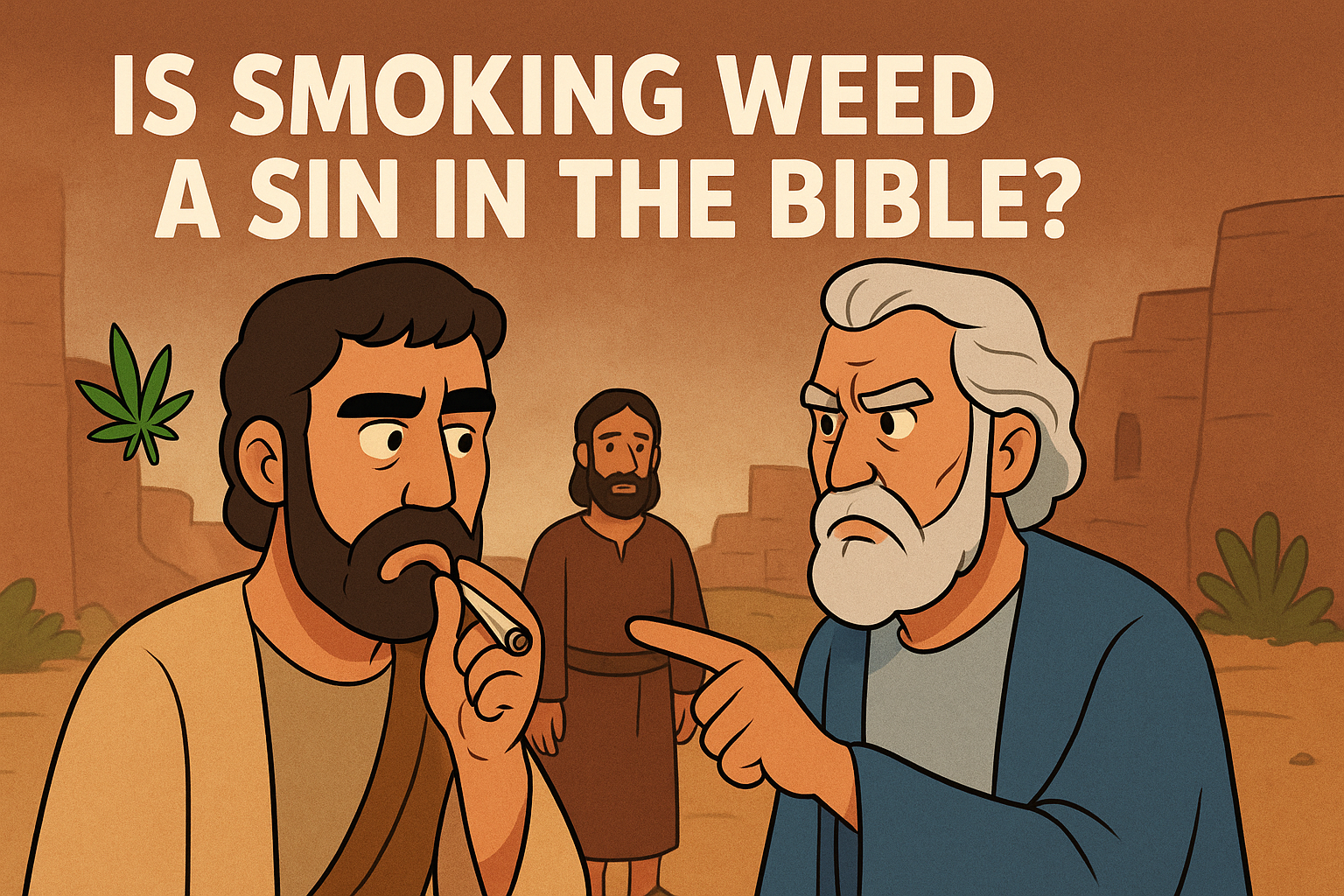
The question of whether smoking weed is a sin in the Bible invites a closer look at Scripture and the principles it teaches. The Bible does not speak directly about marijuana or cannabis. Because Scripture does not mention the plant by name or offer a clear prohibition, many Christians must examine broader biblical principles to determine their stance on using weed.
Understanding Biblical Silence on Marijuana
Scripture does not address specific modern substances such as weed. The ancient texts contain laws, wisdom, and moral guidelines but do not include ideas about modern recreational drugs. As a result, Christians approach this topic by applying general biblical teachings about the use of substances, keeping the body as a gift from God, and practicing self-control and sobriety.
The Bible teaches that our bodies are temples that should be treated with respect. Passages such as those that encourage believers to honor God with their bodies remind us to avoid anything that might cause harm. Because the Bible is silent about marijuana itself, Christians must reflect on these broader principles when deciding if its use is appropriate.
Examining Key Biblical Principles
Stewardship of the Body
One significant principle is the notion of stewardship. Many Christians see their bodies as a gift from God that should be cared for. The New Living Translation contains teachings that suggest believers should avoid practices that could undermine physical well being.
This view has led some to believe that any substance that could impair judgment or lead to physical harm is best avoided. Others argue that moderate and responsible use does not interfere with the responsibility to maintain one s health or to bring honor to God.
Self Control and Sobriety
Scripture also emphasizes the importance of self control. Believers are encouraged to live a sober life and not allow any habit or substance to control their actions. Many Christians interpret these passages as warning against excessive use of substances that diminish the ability to think clearly and act responsibly.
The teaching on sobriety raises questions about any drug that may alter the mind. Some maintain that if smoking weed leads to addiction or impaired decision making, then it may not be in keeping with biblical advice. However, the Bible does not specify weed as a problem, and the discussion remains one that requires careful personal and communal discernment.
Wisdom in Decision Making
The call to seek wisdom features prominently throughout the Bible. This call extends to decisions about health, lifestyle, and behavior. Believers are urged to think carefully about how their choices affect their relationship with God and others.
For example, some may see smoking weed as a way to relax or even as a spiritual experience. Others are concerned about the possibility of dependence or a diminished capacity to serve fully in their communities. The application of biblical wisdom means that individuals should evaluate the potential effects on their lives and consider the overall fruit of their choices.
Differing Viewpoints Among Christians
Because the Bible does not give a definitive answer regarding marijuana, there are different opinions among Christians. Some churches and denominations stress the need to avoid all mind altering substances because of health concerns and the call to sobriety. They believe that any behavior that risks the integrity of the body may be unwise or sinful in the broader context of responsible living.
Other Christians argue that the decision rests on personal conviction and how weed use affects one s spiritual walk and life responsibilities. In this view, moderate use that does not lead to harm or addiction may be acceptable. These believers emphasize that while responsible use may not be sinful per se, it is essential to maintain self control and ensure that the substance does not compromise judgment or witness within the community of faith.
This diversity of thought means that many churches encourage open discussion and seek to follow the guidance of their local community. When people look to biblical truth for clarity, they discover that the Bible is more focused on the heart than on a list of behaviors. A good resource for those who are exploring similar questions can be found in the articles available at GenuineBibleTruth.
Health Concerns and the Christian Lifestyle
Another area of consideration is the impact of smoking weed on physical and mental health. The Bible lauds a life of wholeness and sound judgment. For many Christians, the concern about using substances that may impair thought and damage health is a factor in determining whether a behavior is consistent with a biblical lifestyle.
Marijuana, like any other substance, has the potential for both short term and long term effects. Some studies suggest that its use may have adverse effects on memory and motivation. While these findings come from modern research and not from Scripture itself, they can be pertinent to a discussion of how a believer should care for the body and mind.
Healthy living is a theme in many pastoral teachings. Christians are encouraged to avoid anything that would prevent them from living life to the full. As they evaluate weed usage, they may weigh the benefits such as relaxation and relief from pain against the risks of long term damage or diminished mental clarity. This balance is part of the larger conversation about how to live wisely and honor God with every part of life.
Legal Considerations and Cultural Context
The modern legal status of marijuana varies from place to place. This legal reality adds another dimension to the discussion. For many believers, obeying civil laws forms part of living a life that honors God. The Bible instructs followers to be respectful of governing authorities. Consequently, if marijuana is illegal in a particular region, Christians may feel compelled to abide by the law, not solely for legal reasons but also as a matter of biblical obedience.
In communities where weed is legal and even used for therapeutic purposes, some Christians must contend with the challenge of discerning cultural values from biblical values. While some traditions see upholding the law as a sign of respect and commitment to order, others point out that the Bible often calls for a counter cultural way of living in contrast to secular practices.
The tension between legal permissibility and biblical caution serves as a reminder that the issue is complex. Believers must pray, study the scriptures, and seek counsel within their own communities. A thoughtful analysis of these questions leads to an individualized approach that respects both secular laws and the spirit of biblical teachings.
Impact on Spiritual Life and Witness
A central concern for many Christians is how their choices affect their witness for Christ. The Bible frequently calls believers to live lives that reflect integrity, clear judgment, and compassion. If a behavior like smoking weed causes a believer to act in ways that undermine this witness, then many would regard it as counterproductive to the gospel message.
In many instances, the focus is more on the state of the heart than on the use of any particular substance. A person might use weed in social settings or even for medicinal purposes without it necessarily interfering with their spiritual priorities. Yet problems can arise if the use becomes excessive or leads to neglect of spiritual responsibilities.
Christian living calls for awareness of how our actions influence both ourselves and those around us. The Bible guides believers to consider how their behavior may encourage others in their faith and in their journey toward spiritual growth. Maintaining a balance that is respectful of God s gift of life is paramount in making wise lifestyle choices.
Personal Responsibility and Community Guidance
Because the Bible does not give a clear instruction concerning marijuana, personal responsibility becomes crucial. Believers are encouraged to explore their own convictions and to seek guidance from trusted sources. Discussion within small groups and with wise mentors can offer insight and accountability.
Church leaders and mature Christians may advise those grappling with the question of weed usage by highlighting broader biblical teachings on clear thinking, integrity, and honoring God in all areas of life. In many cases, these discussions lead to a personal evaluation of priorities and the role of substances in a healthy spiritual walk.
One s personal experience may differ significantly from that of another. Therefore, it is important to recognize that one s decision regarding weed use might not be a one size fits all answer when compared to others in the community. A supportive network that encourages honest conversation can help individuals align their actions with their understanding of Scripture.
Historical Perspectives and Changes Over Time
Historically, the Bible was written in a cultural context very different from the modern world. Substance use in ancient times usually refers to practices such as wine consumption. Even in the case of wine, the Bible offers examples of both celebration and caution. Some passages celebrate wine as a blessing in moderation while others warn of its potential to lead to excess and loss of control.
This historical perspective offers a framework for understanding modern issues like marijuana. The lesson is not necessarily a ban on any substance but rather a call to moderation, wisdom, and respect for the body. As society changes and new substances emerge, the core message of the Bible about living a life of balance and dedication remains relevant.
The Bible encourages believers to be discerning. In matters where clear directives are absent, it becomes essential to rely on personal integrity, the counsel of fellow believers, and the wider teachings extracted from Scripture. The dialogue on smoking weed often brings together perspectives that have developed over centuries of Christian thought.
Insights from Christian Tradition
Throughout the centuries, church tradition has contributed significant insight on issues of morality and behavior. Many Christian thinkers have examined the proper use of substances from the point of view of self control and spiritual clarity. Although ancient traditions do not mention weed directly, the underlying concerns about addiction, abuse, and the loss of self control appear repeatedly in the writings of respected theologians.
Those traditions encourage believers to examine their habits to ensure that nothing interferes with the way they worship and serve. They suggest that any practice leading to a diminished life of faith or a compromised testimony may be considered sinful. As a result, some churches today adopt a strict stance against all use of substances that have the potential to sidetrack spiritual focus.
Other traditions hold that the morality of using marijuana depends on the context and the manner in which it is used. They argue that while the Bible does not condone the use of any specific substance, it is wise to look at the overall effect on one s life. In these views, a careful examination of the motives behind using weed and the consequences it brings is necessary before a conclusion is drawn.
Practical Considerations for Today’s Believer
For anyone wrestling with the question of weed use and its alignment with biblical teachings, there are several practical considerations to keep in mind. First, consider the purpose behind using weed. Is it being used solely for relaxation in a controlled setting, or has it become a regular habit that disrupts everyday responsibilities?
Next, examine the impact on personal relationships and ministry responsibilities. If the use of weed begins to hinder one s ability to lead, teach, or serve within the community, it may be time to reassess the practice and find healthier alternatives.
Another consideration is the legal context. Living in a society means laws and government rules should be respected. Obeying the law is part of living in a community that values order and responsibility. For those living in areas where weed is illegal, its use may conflict with biblical instructions to honor governing authorities.
Furthermore, the potential for dependency or excessive use should merit caution. Smoking weed as an occasional recreational activity may differ significantly from regular use that affects mental clarity or motivation. In such cases, self regulation and accountability are important virtues.
The Role of Faith and Prayer in Decision Making
When confronted with a moral question that lacks a clear biblical mandate, turning to prayer and seeking wisdom is an integral part of the Christian walk. Believers are encouraged to ask God for insight and guidance so that their choices reflect honor and care for the body and spirit.
Through prayer, study, and conversation with trusted spiritual leaders, Christians can better understand how to honor God with every aspect of their lives. This approach is not about legalism or a checklist of approved behaviors. Instead, it centers on establishing a heart and a mind devoted to living out the truth of the Gospel in everyday decisions.
Questions of substance use, including weed, depend largely on how that practice aligns with a lifestyle committed to growth, service, and respectful living. Prayer and community support can often provide clear insight where Scripture remains silent.
Bringing Scripture and Culture Together
The conversation about weed use is an example of how Christians apply the wisdom of ancient scriptures to the challenges and opportunities of modern life. Although the Bible does not address weed specifically, it provides a framework for thinking about any activity that may affect one s health or witness.
This process of application involves recognizing that while some biblical guidelines were written for a very different cultural context, their wisdom still speaks to every generation. The call to honor the body, to act with self control, and to be a positive influence remains as relevant today as it was in earlier times.
This balancing act between faithful living and contemporary experiences has been addressed in many discussions among believers. For related insights on topics such as the meaning behind biblical symbols and practices, readers may find helpful perspectives at this resource on studying the Bible.
Evaluating Personal Convictions
One important consideration for each believer is to evaluate personal convictions in light of the broader teachings of Scripture. Since the Bible does not command a specific stance on weed, the focus should shift to whether its use brings glory to God and supports a healthy, responsible lifestyle.
Many who choose to refrain from weed do so because they want to uphold principles of self discipline and respect for the physical body. Others who opt for moderate use stress that it does not impinge on their commitment to living a sober and mindful life. Ultimately, the decision should come from careful personal reflection informed by prayer and guidance from trusted mentors.
This self evaluation is essential in order to ensure that actions, whether in personal or communal settings, reflect the values of clear thinking, service, and love for others. In making choices about weed usage, believers are encouraged to keep their priorities straight and to remain open to adjusting behaviors if the practice begins to negatively influence their spiritual or physical well being.
Reflecting on the Heart of the Matter
At the heart of the debate on smoking weed is the question of whose desires guide a believer s actions. The Bible clearly teaches that a transformed heart leads to transformed behavior. That change comes from a personal encounter with the living God and a continuous renewal of the mind.
When weighing the decision to use weed, the focus should be on what leads a person closer to Christ. Any habit or practice, regardless of its cultural acceptance, should support growth, accountability, and a deepening of one s relationship with God. If smoking weed, in any form, encourages behavior that strays from these priorities, it may be worth reconsidering its role in one s life.
While some may not see a direct biblical prohibition, they may arrive at their conclusion that the potential risks outweigh any benefits. To this end, the conversation becomes not only about obeying Scripture but about living a life that clearly reflects a heart devoted to God.
Integrating Community, Scripture, and Personal Accountability
The challenge of integrating modern practices with ancient teachings requires a community that is both supportive and discerning. In discussing whether smoking weed is a sin in the Bible, many churches encourage group discussions and accountability partners. This communal approach helps individuals understand different perspectives and reinforces the need to live in a way that aligns with biblical values.
Within the Christian community, experience and biblical wisdom go hand in hand. Believers often compare notes about spiritual practices and healthy living so there is room for honest conversation and mutual support. In doing so, they observe the effects of various lifestyle choices not only on themselves but also on the community as a whole.
This spirit of accountability can be a powerful guide. It reminds each individual that a decision regarding any substance use should lead to a life where integrity, clarity, and service shine forth as a testament to one s faith. When personal decisions are weighed against the communal standard of love and responsibility, the true pulse of biblical living is evident.
Final Thoughts on the Biblical Perspective
In the absence of a direct biblical command concerning marijuana, the decision about smoking weed rests on broader biblical principles. Scripture speaks strongly about the care of the body, the pursuit of a clear mind, and the importance of self control. The Bible invites believers to maintain health, wisdom, and accountability in every facet of life.
Therefore, some conclude that any activity that jeopardizes these principles may be considered unwise. Others stand by the belief that moderate use, when managed with responsibility, does not conflict with a heart devoted to God. Believers are encouraged to pray, study Scripture, consult with mature mentors, and evaluate the personal impact of their choices.
This discussion is a reminder that many modern issues require thoughtful interpretation of ancient texts. The answer to whether smoking weed is a sin in the Bible is not universally clear because the Bible does not mention the substance directly. Instead, each believer is called to assess sobriety, integrity, and the potential effects on their witness and physical well being.
In approaching this question, it is vital to center the discussion on a transformed heart. By keeping God at the center of every decision, Christians can navigate complex issues with wisdom and compassion. As believers seek to honor God in every choice, they continue to honor the timeless call to live fully in body and spirit.